Cybersecurity has become one of the most important areas of the modern technology industry. As businesses move more of their operations online, the need for skilled security professionals continues to grow. From protecting customer information to preventing cyberattacks, cybersecurity specialists play a critical role in keeping organizations safe.
One of the biggest questions people ask before entering this field is simple: What is the average security salary?
The answer depends on several factors, including job title, experience, education, certifications, location, industry, and technical skills. Some entry-level security professionals start with a comfortable income, while experienced cybersecurity specialists, engineers, architects, and managers can earn significantly more.
In this guide, we will explore security salary expectations, the highest-paying cybersecurity jobs, factors that influence earnings, useful certifications, and ways to increase your income in this growing career field.
What Is a Security Salary?
Security salary refers to the amount of money a professional earns for working in cybersecurity or information security. Depending on the position, compensation may include a base salary, bonuses, stock options, overtime, benefits, and other incentives.
Cybersecurity is a broad career field. A security analyst, for example, may have a very different salary from a security architect or cybersecurity manager. This is why there is no single salary figure that applies to everyone working in security.
Entry-level professionals generally earn less than experienced specialists, but cybersecurity offers strong opportunities for career growth.
Average Security Salary
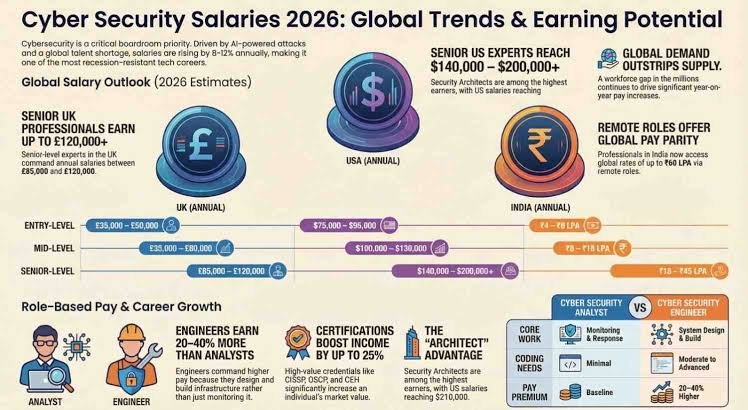
The average security salary varies considerably across the United States. Entry-level cybersecurity positions can often provide salaries in the range of approximately $60,000 to $85,000 per year, depending on the employer and location.
Professionals with several years of experience may earn between $90,000 and $130,000 annually. Highly experienced specialists, engineers, architects, and security managers can potentially earn $130,000 to $180,000 or more.
Some senior professionals working for large technology companies, financial institutions, consulting firms, or specialized security organizations may receive total compensation well above these figures.
It is important to remember that salary estimates change over time and vary from one employer to another. Your actual earning potential may be higher or lower depending on your skills and circumstances.
Entry-Level Security Salary
Starting a career in cybersecurity does not always require decades of experience. Many people enter the industry through roles such as junior security analyst, SOC analyst, IT security technician, or security administrator.
An entry-level security salary may typically fall between $60,000 and $85,000 per year in the United States. Candidates with strong technical skills, internships, relevant education, and industry certifications may have an advantage when applying for their first position.
Entry-level professionals should focus less on earning the maximum salary immediately and more on building practical experience. The skills gained during the first few years can have a major impact on future career opportunities.
Cybersecurity Analyst Salary
Cybersecurity analysts are responsible for monitoring systems, identifying suspicious activity, investigating security incidents, and helping organizations protect their networks and data.
A cybersecurity analyst may earn around $75,000 to $110,000 per year, although salaries can vary significantly based on experience and location.
As analysts develop stronger skills in threat detection, incident response, security monitoring, and security tools, they can move into senior analyst positions. These roles often provide higher compensation and greater responsibility.
Security Engineer Salary
Security engineers design, implement, and maintain security solutions that protect an organization’s technology infrastructure.
Because the position usually requires strong technical knowledge, a security engineer salary can be higher than many entry-level cybersecurity positions. Experienced security engineers may earn $100,000 to $150,000 or more annually.
Knowledge of cloud platforms, network security, identity management, automation, and security architecture can make a security engineer more competitive in the job market.
Security Architect Salary
Security architects are responsible for designing an organization’s overall security structure. They often work with engineers, developers, IT teams, and management to create secure technology environments.
This is generally a senior-level career. Security architects can earn $130,000 to $180,000 or more depending on their experience, industry, location, and employer.
Professionals interested in this career usually need years of technical and cybersecurity experience. Strong communication and strategic thinking are also important because architects often need to explain complex security decisions to business leaders.
Cybersecurity Manager Salary
Cybersecurity managers supervise security teams and coordinate security programs. Their responsibilities may include managing security operations, developing policies, responding to major incidents, and communicating security risks to executives.
A cybersecurity manager may earn approximately $110,000 to $160,000 or more per year. Larger organizations may offer higher compensation, particularly when the role includes significant leadership responsibilities.
Moving into management can therefore be an effective way to increase earning potential, although it also requires strong leadership and communication skills.
Factors That Affect Security Salary
Several factors can influence how much a cybersecurity professional earns.
Experience
Experience is one of the most important factors. Someone with one year of experience will usually earn less than a professional with ten years of specialized cybersecurity experience.
As professionals develop their expertise, they can qualify for senior and leadership positions.
Education
A degree in cybersecurity, computer science, information technology, or a related field can help candidates qualify for certain positions. However, education is only one part of the equation.
Employers also value practical skills, certifications, projects, and real-world experience.
Certifications
Professional certifications can help demonstrate specialized knowledge. Popular options include CompTIA Security+, Certified Ethical Hacker, CISSP, and cloud-related security certifications.
Certifications do not automatically guarantee a higher salary, but they can strengthen a candidate’s resume and help demonstrate commitment to the profession.
Location
Where you work can have a major impact on salary. Major technology and financial centers often offer higher salaries because employers face stronger competition for skilled cybersecurity professionals.
However, higher salaries in expensive cities may also come with higher housing and living costs.
Remote work has changed this equation for some professionals because it allows candidates to apply for positions outside their immediate geographic area.
Industry

The industry you work in can also influence your income. Financial services, technology, healthcare, government, consulting, and large corporations all have significant cybersecurity requirements.
Organizations that manage sensitive financial or customer information may be willing to pay more for experienced security professionals.
Highest-Paying Cybersecurity Careers
If your primary goal is maximizing your security salary, several career paths are worth considering.
Security architects can earn high salaries because they are responsible for designing enterprise-wide security systems.
Security engineers can also earn strong compensation because organizations need professionals who can implement and maintain advanced security technologies.
Cloud security specialists are increasingly valuable as businesses move infrastructure and applications to cloud platforms.
Security managers and directors can earn even more because they combine technical knowledge with leadership and strategic responsibilities.
Other potentially high-paying specialties include penetration testing, application security, incident response, threat intelligence, and digital forensics.
How to Increase Your Security Salary
Increasing your income usually requires more than simply waiting for annual raises. Developing valuable skills can make a significant difference.
First, build a strong technical foundation. Learn networking, operating systems, authentication, encryption, and common security concepts.
Next, gain hands-on experience. Home labs, cybersecurity projects, internships, and practical training can help turn theoretical knowledge into useful skills.
You should also consider earning certifications that match your career goals. For example, someone interested in entry-level security may choose a foundational certification, while an experienced professional may pursue an advanced credential.
Specialization can also improve your earning potential. Cloud security, application security, identity and access management, penetration testing, and security engineering are examples of areas where specialized knowledge can be valuable.
Finally, develop communication skills. Senior cybersecurity professionals often need to explain technical risks to people who do not have a technical background. The ability to communicate clearly can become extremely valuable as you move into senior positions.
Is Cybersecurity a Good Career?
For people interested in technology, problem-solving, and digital security, cybersecurity can be a rewarding career choice.
The industry continues to evolve as organizations face new threats and adopt new technologies. Artificial intelligence, cloud computing, remote work, connected devices, and digital services all create new security challenges.
This means companies need professionals who can understand risks and develop effective ways to protect systems and information.
Cybersecurity can also offer multiple career paths. You can begin in an entry-level security role and eventually specialize in engineering, penetration testing, cloud security, threat intelligence, architecture, or management.
Frequently Asked Questions
1. What is the average security salary in the United States?
The average security salary varies by role and experience. Entry-level professionals may earn around $60,000–$85,000 annually, while experienced cybersecurity professionals can earn well over $100,000.
2. What is an entry-level cybersecurity salary?
An entry-level cybersecurity professional may earn approximately $60,000–$85,000 per year. Education, certifications, technical skills, and location can affect the starting salary.
3. Which cybersecurity job has the highest salary?
Senior positions such as security architect, cybersecurity director, security manager, and specialized security engineers are among the higher-paying cybersecurity careers.
4. Does cybersecurity pay well?
Yes, cybersecurity can be a well-paying career. Professionals with advanced technical skills, experience, and specialized knowledge can qualify for high-paying positions.
5. Do cybersecurity certifications increase salary?
Certifications can strengthen your resume and demonstrate specialized knowledge. While they do not guarantee a higher salary, they may help professionals qualify for better job opportunities.
6. How much does a security analyst make?
A security analyst may earn approximately $75,000–$110,000 per year, depending on experience, location, employer, and technical expertise.
7. How much does a security engineer make?
Security engineers can potentially earn $100,000–$150,000 or more annually, particularly when they have strong experience in cloud security, network security, and enterprise technologies.
8. Does location affect security salary?
Yes. Salaries can vary significantly by location. Areas with high demand for cybersecurity professionals may offer higher salaries, although living costs can also be higher.
9. How can I increase my cybersecurity salary?
You can improve your earning potential by gaining practical experience, developing specialized technical skills, earning relevant certifications, and moving into senior or leadership positions.
10. Is cybersecurity a good career for the future?

Cybersecurity can be a strong career choice because organizations continue to need professionals who can protect systems, networks, applications, and sensitive information from evolving cyber threats.
Final Thoughts
A security salary can vary widely depending on experience, job title, education, certifications, location, industry, and technical specialization. Entry-level professionals may begin around the $60,000 range, while experienced engineers, architects, managers, and specialized experts can potentially earn well into six figures.
The most important thing is to focus on building valuable skills rather than chasing a salary number alone. Strong technical knowledge, practical experience, recognized certifications, and effective communication can help you progress toward better opportunities.
If you are considering cybersecurity as a career, start by learning the fundamentals and gaining hands-on experience. As your knowledge grows, choose a specialization that matches your interests and the needs of the job market.
With continuous learning and a clear career strategy, cybersecurity can provide both professional growth and strong earning potential for years to come.