Introduction to Digital Forensics
In today’s digital world, technology has become an essential part of everyday life. People use computers, smartphones, cloud platforms, and online services for communication, business, banking, education, and entertainment. While digital technology has created countless opportunities, it has also increased the risks of cybercrime, data theft, online fraud, and security breaches.
This is where Digital Forensics plays a critical role.
Digital Forensics is a specialized field of cybersecurity that focuses on identifying, collecting, preserving, analyzing, and presenting digital evidence from electronic devices. Experts in this field investigate cyber incidents and recover valuable information that can help organizations, law enforcement agencies, and individuals understand what happened during a security event.
Whether it is recovering deleted files from a computer, investigating a data breach, tracking cybercriminal activity, or analyzing suspicious network behavior, digital forensics provides the scientific methods needed to uncover digital evidence.
As cyber threats continue to grow, the demand for skilled digital forensic professionals is increasing rapidly. Businesses, governments, and security organizations need experts who can investigate attacks, protect sensitive information, and support legal investigations.
This comprehensive guide explores everything about digital forensics, including its importance, processes, types, tools, career opportunities, certifications, and future developments.
What Is Digital Forensics?
Digital Forensics is the process of investigating digital devices and electronic data to discover, collect, analyze, and preserve evidence in a legally acceptable manner.
The main purpose of digital forensics is to find answers to important questions:
- What happened during a cyber incident?
- Who was responsible?
- How did the attacker gain access?
- What information was stolen or modified?
- When did the activity occur?
- How can similar incidents be prevented in the future?
Digital forensic investigators use advanced techniques and specialized software to examine digital systems without damaging the original evidence.
The field combines cybersecurity, computer science, investigation methods, and legal procedures.
Common sources of digital evidence include:
- Computers and laptops
- Smartphones and tablets
- Hard drives and storage devices
- Cloud accounts
- Email systems
- Network devices
- Servers
- Social media platforms
- Internet browsers
- Digital applications
Every digital action can leave behind traces. These traces may include login records, deleted files, browser history, metadata, communication records, and system logs.
Digital forensics professionals analyze these traces to reconstruct events and discover the truth behind digital activities.
Why Is Digital Forensics Important?
The importance of digital forensics has increased because modern crimes are becoming more technology-driven. Criminals no longer rely only on physical methods; many illegal activities now happen through computers, networks, and online platforms.
Digital forensics helps organizations and authorities fight against various forms of cybercrime.
1. Investigating Cybercrime
Cybercriminals use advanced techniques to attack individuals and organizations. They may steal passwords, install malware, conduct financial fraud, or steal confidential information.
Digital forensic experts analyze compromised systems to identify attack methods and collect evidence against criminals.
Examples include:
- Hacking investigations
- Online fraud cases
- Identity theft investigations
- Ransomware attacks
- Data breaches
2. Recovering Deleted Data
Many people believe that deleting a file permanently removes it. However, digital forensic techniques can often recover deleted information from storage devices.
Investigators can recover:
- Deleted documents
- Images
- Videos
- Emails
- Chat messages
- System records
Recovered data can provide important evidence during investigations.
3. Supporting Legal Investigations
Digital evidence is becoming increasingly important in courts and legal proceedings.
Law enforcement agencies use digital forensics to investigate:
- Cybercriminal activities
- Financial crimes
- Fraud
- Intellectual property theft
- Online harassment
- Unauthorized access cases
Forensic professionals must follow strict procedures to ensure evidence remains reliable and legally acceptable.
4. Protecting Businesses
Companies store valuable information such as customer data, financial records, and intellectual property.
A cyberattack can cause serious financial and reputational damage.
Digital forensics helps businesses:
- Identify security weaknesses
- Investigate breaches
- Understand attacker behavior
- Recover compromised systems
- Improve cybersecurity strategies
History of Digital Forensics
Digital forensics is a relatively modern field that developed alongside the growth of computers and the internet.
Early Computer Investigations
During the early days of computing, investigators mainly focused on examining computer systems for evidence. As personal computers became popular in homes and businesses, criminals began using technology for illegal activities.
Law enforcement agencies started developing methods to analyze computer data and recover digital information.
Growth During the Internet Era
The expansion of the internet created new types of cybercrime, including:
- Email scams
- Website attacks
- Online fraud
- Malware distribution
- Data theft
This increased the need for specialized forensic investigation techniques.
Organizations began creating dedicated digital forensic teams to handle cyber incidents.
Modern Digital Forensics
Today, digital forensics covers much more than computers.
Modern investigators analyze:
- Mobile devices
- Cloud environments
- Internet-connected devices
- Cryptocurrency transactions
- Artificial intelligence systems
- Smart devices
The field continues to evolve as technology changes.
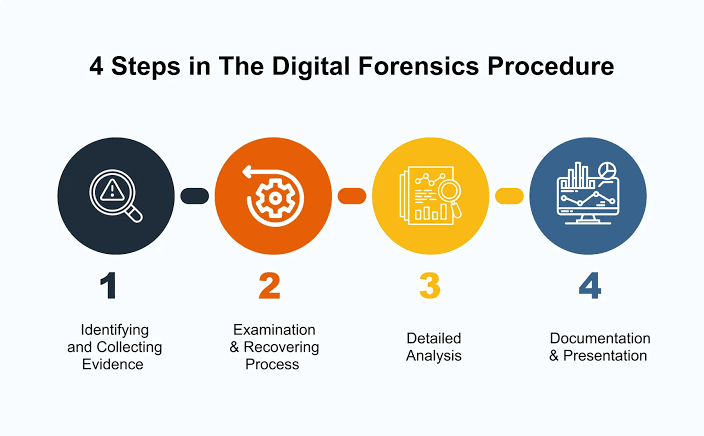
How Digital Forensics Works
Digital forensic investigations usually follow a structured process. Investigators must carefully handle evidence to maintain accuracy and reliability.
The main stages include:
1. Identification
The first step is identifying possible sources of digital evidence.
Investigators determine:
- Which devices are involved
- Where data may exist
- What type of information is needed
For example, during a company data breach, investigators may examine employee computers, servers, network logs, and cloud accounts.
2. Collection
After identifying evidence sources, investigators collect digital information carefully.
The goal is to collect data without changing or damaging the original evidence.
Common collection methods include:
- Creating forensic copies
- Capturing system images
- Extracting device data
- Collecting network logs
3. Preservation

Digital evidence must be protected from modification.
Investigators use special techniques such as:
- Hash verification
- Secure storage
- Evidence documentation
Preservation ensures that evidence remains trustworthy.
4. Analysis
During analysis, forensic experts examine collected data to discover useful information.
They search for:
- Suspicious files
- Hidden data
- Malware traces
- User activity
- Communication records
- Timeline information
This stage requires technical skills and experience.
5. Reporting
The final step is creating a detailed forensic report.
A forensic report explains:
- Investigation methods
- Evidence discovered
- Analysis results
- Important findings
- Recommendations
Reports may be used by company leaders, security teams, investigators, or courts.
Types of Digital Forensics
Digital forensics contains several specialized areas. Each area focuses on different types of devices, systems, and investigations.
Computer Forensics
Computer forensics is one of the oldest branches of digital investigation.
It involves examining computers, laptops, and storage devices to recover and analyze digital evidence.
Investigators examine:
- Operating system files
- User accounts
- Documents
- Applications
- Browser activity
- Deleted information
Computer forensics is commonly used in corporate investigations and criminal cases.
Mobile Device Forensics
Mobile devices contain enormous amounts of personal and professional information.
Mobile forensic experts analyze:
- Call records
- Messages
- Photos
- Videos
- Applications
- Location information
- Social media activity
Because smartphones are constantly evolving, mobile forensics is one of the fastest-growing areas in cybersecurity.
Frequently Asked Questions (FAQs) About Digital Forensics
1. What is Digital Forensics?
Digital Forensics is the process of collecting, preserving, analyzing, and investigating digital evidence from electronic devices such as computers, smartphones, servers, and cloud systems. It helps identify cybercrimes, recover lost data, and understand security incidents.
2. Why is Digital Forensics important in cybersecurity?
Digital Forensics plays an important role in cybersecurity because it helps organizations investigate cyberattacks, identify attackers, recover compromised data, and prevent future security threats.
3. What types of evidence can digital forensic experts recover?
Digital forensic experts can recover different types of digital evidence, including deleted files, emails, browser history, images, videos, documents, system logs, chat records, and other digital information.
4. What are the main types of Digital Forensics?
The major types of Digital Forensics include computer forensics, mobile device forensics, network forensics, cloud forensics, database forensics, email forensics, and malware forensics.
5. How does a Digital Forensics investigation work?
A digital forensics investigation usually involves five main steps: identification of evidence, collection of data, preservation of evidence, analysis of information, and preparation of a detailed forensic report.
6. What tools are used in Digital Forensics?
Digital forensic professionals use specialized tools such as forensic imaging software, data recovery tools, network analysis tools, malware analysis platforms, and evidence management systems to investigate digital activities.
7. Is Digital Forensics a good career choice?
Yes, Digital Forensics is a growing career field with strong demand in cybersecurity, law enforcement, government agencies, and private organizations. Professionals can work as forensic analysts, security investigators, incident responders, and cybersecurity specialists.
8. What skills are required to become a Digital Forensics expert?
Important skills for digital forensic professionals include computer networking, operating systems, cybersecurity concepts, malware analysis, data recovery, problem-solving, and knowledge of forensic investigation methods.
9. Which certifications are best for Digital Forensics?
Popular certifications related to Digital Forensics include Certified Computer Examiner (CCE), GIAC Certified Forensic Examiner (GCFE), Certified Cyber Forensics Professional (CCFP), and other cybersecurity certifications that focus on investigation and incident response.
10. What is the future of Digital Forensics?
The future of Digital Forensics is expected to grow with advancements in artificial intelligence, cloud computing, mobile technology, and cyber threats. Organizations will continue to need skilled professionals to investigate and protect digital information.
Conclusion
Digital Forensics has become an essential part of modern cybersecurity. It helps investigate cybercrimes, recover digital evidence, and protect valuable information. As technology and cyber threats continue to grow, the demand for skilled digital forensic professionals will increase. Learning digital forensics can open excellent career opportunities in the cybersecurity industry.