Introduction
In today’s digital world, personal information has become one of the most valuable assets. Every time you shop online, create a social media account, use internet banking, or simply browse a website, you leave behind pieces of personal data. While technology has made life easier, it has also created opportunities for cybercriminals to steal identities and commit fraud.
Identity protection is no longer optional—it is an essential part of everyday life. Millions of people worldwide become victims of identity theft each year, resulting in financial losses, damaged credit scores, emotional stress, and countless hours spent recovering stolen identities.
This comprehensive guide explains everything you need to know about identity protection, including how identity theft happens, how to recognize warning signs, and the most effective ways to protect yourself and your family.
What Is Identity Protection?
Identity protection refers to the methods, tools, and practices used to safeguard personal information from unauthorized access, theft, and misuse.
Your identity includes information such as:
- Full name
- Date of birth
- Home address
- Email address
- Phone number
- Social Security Number (SSN)
- Passport number
- Driver’s license
- Credit card information
- Bank account details
- Medical records
- Login credentials
Criminals use this information to impersonate victims and commit fraud.
Why Identity Protection Is Important
As our daily activities move online, personal information becomes increasingly vulnerable.
Identity protection helps:
- Prevent financial fraud
- Protect credit scores
- Secure online accounts
- Prevent unauthorized loans
- Protect tax information
- Safeguard medical records
- Reduce cybercrime risks
- Maintain personal privacy
Without proper protection, recovering from identity theft can take months or even years.
Understanding Identity Theft
Identity theft occurs when someone steals another person’s personal information and uses it without permission.
Common goals include:
- Opening credit cards
- Applying for loans
- Filing fake tax returns
- Accessing bank accounts
- Making online purchases
- Creating fake identities
- Committing insurance fraud
Identity theft affects individuals of all ages.
Types of Identity Theft
Financial Identity Theft
This is the most common type.
Criminals use stolen financial information to:
- Open bank accounts
- Apply for loans
- Obtain credit cards
- Make unauthorized purchases
Medical Identity Theft
Someone uses your identity to receive medical treatment or purchase prescription drugs.
Consequences include:
- Incorrect medical records
- Insurance problems
- Large medical bills
Tax Identity Theft
Criminals file fraudulent tax returns using stolen personal information to claim refunds.
Victims often discover the fraud only after attempting to file their legitimate tax return.
Child Identity Theft
Children are attractive targets because their credit histories usually remain unused for years.
Parents may not discover identity theft until the child becomes an adult.
Employment Identity Theft
Someone uses another person’s identity to obtain employment.
This may create tax issues and legal complications.
Criminal Identity Theft
An offender provides another person’s identity when arrested.
This may lead to:
- False criminal records
- Court notices
- Legal complications
How Identity Theft Happens
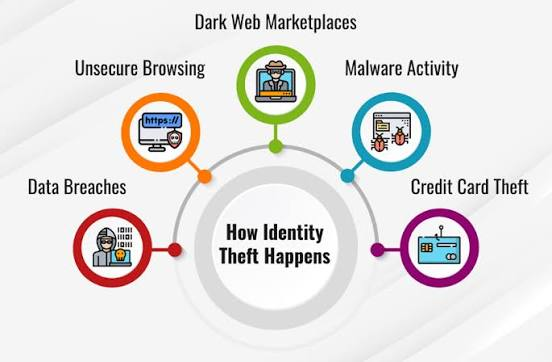
Identity thieves use many different methods.
Phishing Emails
Fake emails attempt to trick users into revealing:
- Passwords
- Banking information
- Credit card numbers
Always verify the sender before clicking links.
Data Breaches
Large companies sometimes experience security breaches.
Hackers may steal:
- Customer names
- Passwords
- Payment information
- Email addresses
Using unique passwords reduces the damage from data breaches.
Public Wi-Fi
Unsecured Wi-Fi networks expose personal information to attackers.
Avoid logging into:
- Banking apps
- Shopping websites
- Investment accounts
while using public Wi-Fi unless you use a trusted VPN.
Weak Passwords
Simple passwords remain one of the biggest security risks.
Avoid passwords such as:
- 123456
- password
- qwerty
- your birthday
Use long, unique passwords instead.
Social Engineering
Cybercriminals manipulate victims into voluntarily providing sensitive information.
They may pretend to be:
- Banks
- Government agencies
- Internet providers
- Delivery companies
Always verify requests before sharing personal information.
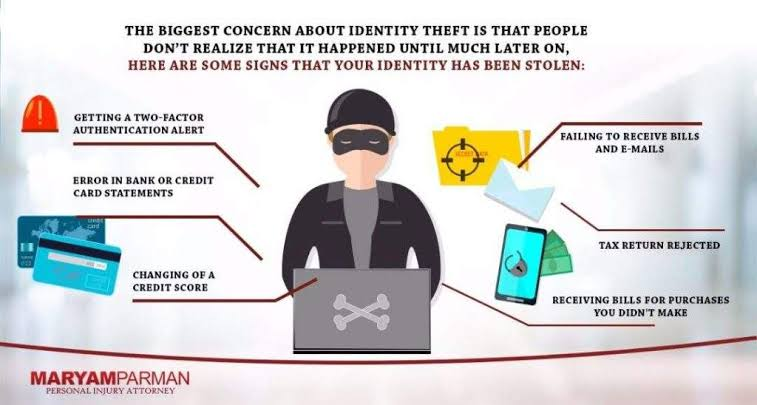
Warning Signs of Identity Theft
Common warning signs include:
- Unknown charges on bank statements
- Missing bills
- Unexpected credit inquiries
- Loan applications you never made
- Collection notices
- Suspicious login alerts
- Password reset emails you didn’t request
- Medical bills for unknown services
- Tax return rejection due to duplicate filing
Respond immediately if any of these occur.
Best Practices for Identity Protection
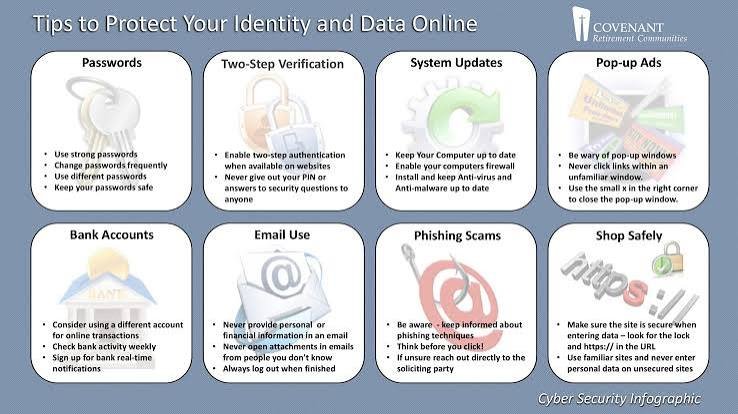
Create Strong Passwords
Strong passwords should include:
- Uppercase letters
- Lowercase letters
- Numbers
- Special characters
Each account should have a different password.
Enable Multi-Factor Authentication
Multi-factor authentication (MFA) adds another layer of protection.
Even if someone steals your password, they still need a second verification step.
This significantly reduces the risk of unauthorized access.
Keep Software Updated
Software updates fix security vulnerabilities.
Update regularly:
- Operating systems
- Browsers
- Mobile apps
- Antivirus software
Automatic updates are recommended.
Secure Your Devices
Protect computers and smartphones using:
- Screen locks
- Biometrics
- Encryption
- Antivirus software
- Firewalls
Never leave devices unattended in public places.
Monitor Financial Accounts
Check:
- Bank statements
- Credit card transactions
- Investment accounts
Early detection helps minimize financial losses.
Identity Protection for Online Shopping
Shopping online is convenient, but it also comes with risks.
Follow these safety tips:
- Shop only from reputable websites.
- Look for HTTPS in the browser address bar.
- Avoid saving payment information on public devices.
- Use secure payment methods.
- Review transaction history regularly.
Protecting Your Social Media Accounts
Social media platforms often contain personal information that criminals can exploit.
To stay safe:
- Limit the personal details you share publicly.
- Review privacy settings regularly.
- Avoid posting travel plans in real time.
- Be cautious about friend requests from unknown people.
- Enable multi-factor authentication on all accounts.
10 Benefits of Identity Protection
1. Prevents Financial Fraud
Identity protection helps safeguard your bank accounts, credit cards, and other financial information from unauthorized access and fraudulent transactions.
2. Protects Your Credit Score
By detecting suspicious activity early, identity protection reduces the risk of fraudulent accounts damaging your credit history.
3. Secures Personal Information
It keeps sensitive details such as your Social Security number, passport, driver’s license, and personal records safe from cybercriminals.
4. Detects Identity Theft Early
Many identity protection services monitor your personal information and alert you quickly if suspicious activity is detected.
5. Reduces Financial Losses
Early detection allows you to stop fraudulent transactions before they cause significant financial damage.
6. Enhances Online Security
Using strong passwords, multi-factor authentication, and secure browsing practices lowers the risk of online attacks.
7. Protects Your Family
Identity protection strategies can help safeguard children, seniors, and other family members from becoming victims of identity theft.
8. Saves Time During Recovery
Preventive measures reduce the amount of time and effort needed to recover from identity theft.
9. Improves Privacy
Identity protection minimizes the amount of personal information exposed online, helping you maintain greater privacy.
10. Provides Peace of Mind
Knowing your personal information is protected allows you to use online services with greater confidence and less worry.
Frequently Asked Questions (FAQs)
1. What is identity protection?
Identity protection is the process of securing your personal and financial information from theft, fraud, and unauthorized use through safe practices and monitoring tools.
2. Why is identity protection important?
It helps prevent financial fraud, protects your credit score, secures sensitive information, and reduces the risk of identity theft.
3. What is the difference between identity protection and identity theft protection?
Identity protection includes preventive measures like strong passwords and secure browsing, while identity theft protection services monitor your information and alert you to suspicious activity.
4. How can I protect my identity online?
Use strong and unique passwords, enable multi-factor authentication, avoid suspicious links, keep your software updated, and use secure internet connections.
5. What are the common signs of identity theft?
Unexpected bank transactions, unfamiliar credit accounts, debt collection notices, login alerts you didn’t request, and rejected tax returns can all indicate identity theft.
6. Can identity theft be completely prevented?
No method can guarantee complete protection, but following cybersecurity best practices greatly reduces the risk.
7. Is identity protection worth it?
Yes. The cost of prevention is often much lower than the financial and emotional impact of recovering from identity theft.
8. How often should I check my credit report?
You should review your credit report at least once a year, and more frequently if you suspect fraudulent activity.
9. Does using public Wi-Fi increase the risk of identity theft?
Yes. Unsecured public Wi-Fi networks can expose your personal information. Use a trusted VPN and avoid accessing sensitive accounts on public networks.
10. What should I do if my identity is stolen?
Immediately contact your bank and credit card providers, change your passwords, place a fraud alert or credit freeze on your credit reports, report the theft to the appropriate authorities, and monitor your accounts for further suspicious activity.
Conclusion
Identity protection is no longer just an option—it is a necessity in today’s digital world. As cyber threats continue to evolve, protecting your personal and financial information should be a top priority. By following simple security practices such as creating strong passwords, enabling multi-factor authentication, monitoring your financial accounts, avoiding phishing scams, and keeping your devices updated, you can significantly reduce the risk of identity theft.
Whether you are shopping online, using social media, or managing your finances, staying informed and proactive is the best defense against cybercriminals. Investing time in identity protection today can help you avoid financial losses, protect your privacy, and maintain your peace of mind in the future. Remember, safeguarding your identity is an ongoing process, and taking preventive steps now will help ensure your personal information remains secure for years to come.